Economy guide
ETS2 Driver Rating Guide: What the Number Means
Understand ETS2 driver rating, why hired drivers start weak, and how training choices affect long-term company income.
UpdatedJul 4, 2026
Read7 min
LevelIntermediate
ByETS2Hub
Quick answer
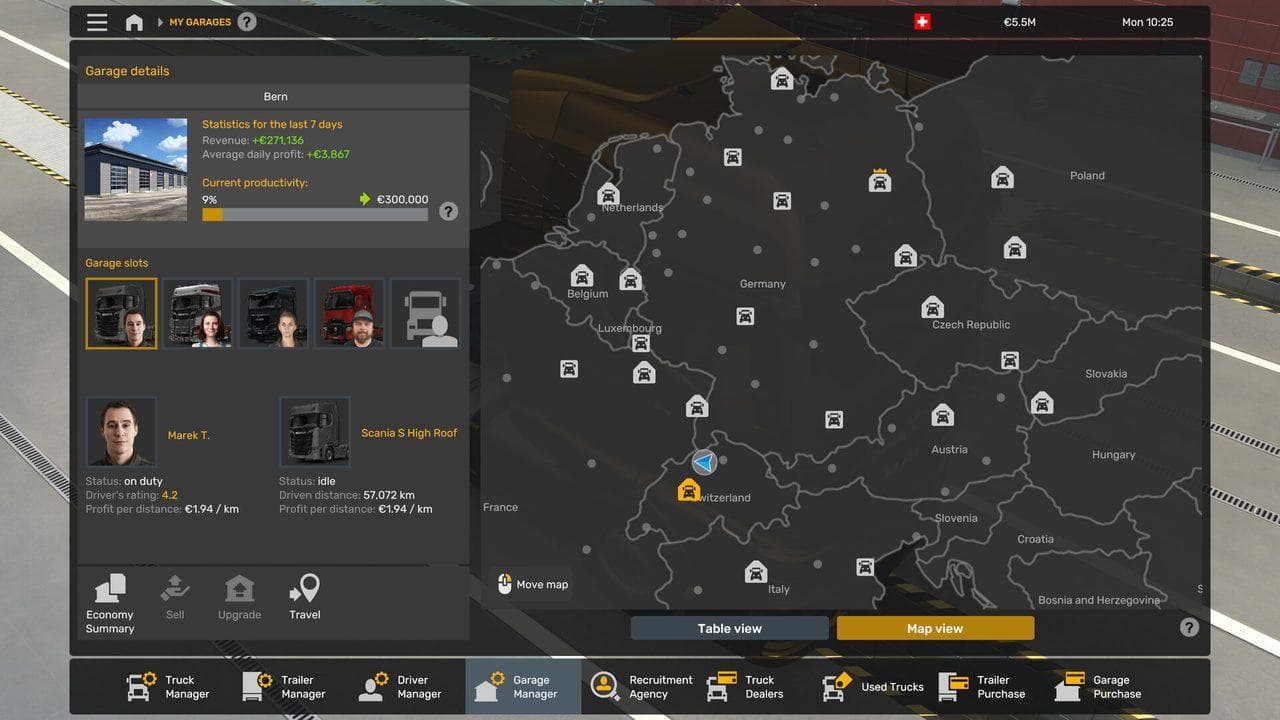
ETS2 driver rating is mainly a shorthand for driver skill development, not proof that a driver will instantly earn high profit. A low-rated driver can still improve with time, jobs, and training. Use rating to compare candidates, but judge income by truck assignment, garage location, skills, trailer limits, and several in-game days of results.
Driver rating in ETS2 is easy to misunderstand. A higher rating usually means a driver has more developed skills, but it does not guarantee instant profit. A driver still needs a truck, a useful garage, enough job options, and time to work.
Use this after How to Hire Drivers in ETS2 and before expanding your fleet too quickly.
What Driver Rating Means
Treat driver rating as a summary of skill progress. It is not a hidden personality score, loyalty score, or guarantee that the driver will always find high-paying jobs.
Rating is useful for:
- Comparing candidates before hiring.
- Seeing whether a driver is developing.
- Checking if training is spreading skills or staying narrow.
- Avoiding the expectation that a brand-new driver will earn like your main profile.
It is not enough for:
- Judging one bad trip.
- Predicting profit from one delivery.
- Fixing a poor garage location.
- Making a niche trailer work everywhere.
Why Low-Rated Drivers Earn Slowly
New drivers have limited skills. That means fewer long-distance jobs, fewer high-value jobs, fewer fragile or ADR jobs, and weaker bonuses. They may also return empty more often when the game cannot find a suitable return cargo.
Do not judge a driver from one result. Watch the average over several in-game days.
Training Choices
For early company growth, keep training simple:
| Driver Stage | Sensible Training |
|---|---|
| New hire | Balanced or Long Distance |
| Some route access | High Value and Fragile Cargo |
| Later growth | ADR if you want more cargo variety |
| Hands-off fleet | Balanced |
Long Distance is useful because more route options can help drivers find jobs. Balanced is safer if you do not want to micromanage every employee.
Rating vs Profit
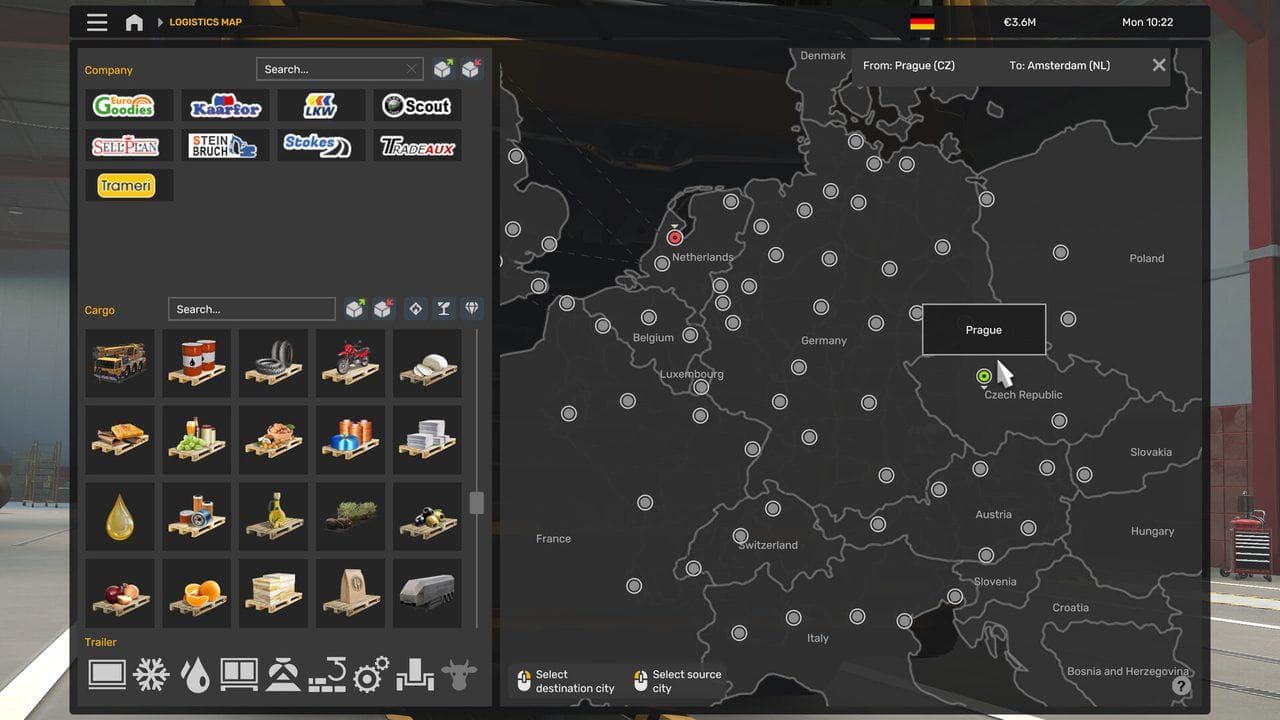
A driver with a better rating can still earn poorly if the setup is bad.
Check these before blaming rating:
- Is the driver assigned to a truck?
- Is the garage city useful for jobs?
- Is an owned trailer limiting cargo options?
- Has the driver worked for several in-game days?
- Is training aligned with normal cargo availability?
- Are mods or missing content affecting job generation?
If the answer to any of those is no, fix the setup first.
Common Rating Mistakes
- Hiring only by rating and ignoring the total company cost.
- Firing a driver after one empty return.
- Giving new drivers expensive trucks too early.
- Assigning specialized trailers before skills and local cargo support them.
- Switching training constantly without letting skills build.
Practical Rule
Use rating as a comparison tool, not a verdict. Hire carefully, train steadily, assign practical trucks, avoid restrictive trailers at first, and evaluate drivers over time. A stable 5-driver company with sensible training is better than a rushed fleet of expensive trucks that barely earns.
If income is already bad, follow Why Your ETS2 Drivers Are Not Making Money before hiring more people.
Read next
Continue through the next task instead of jumping to a random tag page.
EconomyHow to Hire Drivers in ETS2
Learn when and how to hire drivers in ETS2, what they need to start earning, and which early expansion mistakes to avoid.
EconomyETS2 Drivers Not Making Money? 7 Checks
Fix ETS2 hired drivers earning zero, losing money, returning empty, or sitting idle by checking trucks, garages, training, trailers, and in-game time.
EconomyBest ETS2 Skills: Skill Point Order for Beginners
Use a beginner-friendly ETS2 skill point order to unlock longer routes, better cargo, and stronger early income without wasting your first levels.